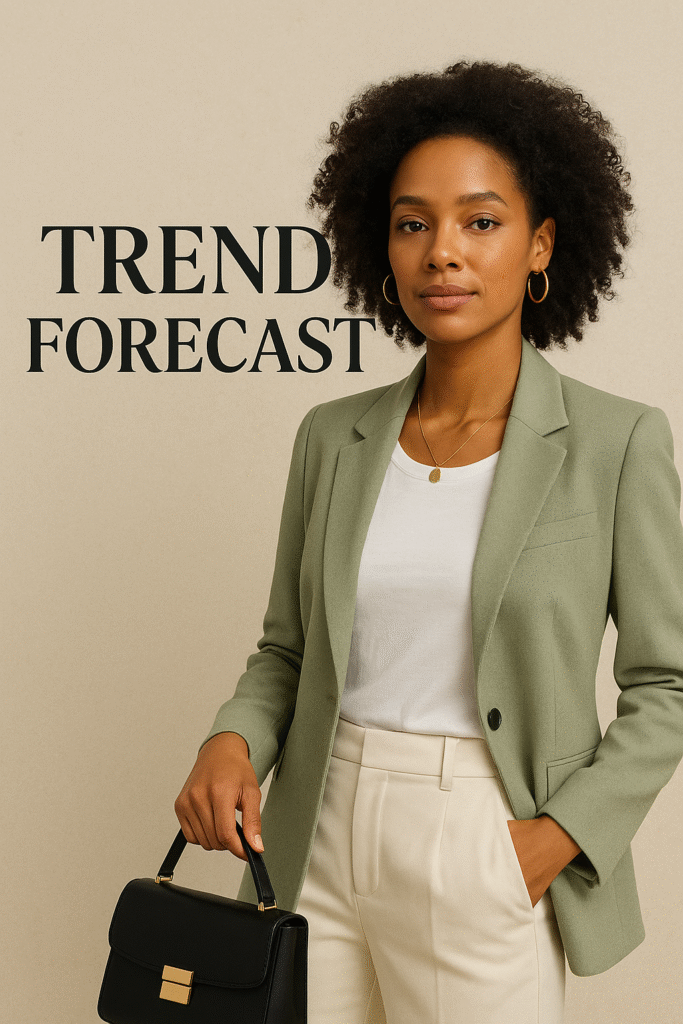

- Trend Forecast: Decoding the Future of Style and Society.
The Science of Seeing Ahead: Defining Trend Forecasting.
The whole idea of trend forecasting is really very misunderstood; most people still think it’s about a fashion editor arbitrarily declaring “purple is in” or “mini-skirts are back.” In fact, good forecasting has little to do with predicting a specific hemline or a single color and everything to do with painstakingly, analytically, and data-drivenly identifying nascent shifts in consumer values, psychological drivers, and cultural moods that will coalesce into commercially viable products, aesthetics, and behaviors. It’s less about crystal-ball gazing than about studying seismic activity-monitoring the subliminal, almost imperceptible tremors on the periphery of society to understand where the next major cultural earthquake will strike. The forecaster’s key job is to connect a group of seemingly disparate dots-a geopolitical conflict here, a technological breakthrough there, a shift in musical taste over there-and synthesize them into a plausible narrative explaining why millions of people will suddenly begin desiring a particular shape, material, or color two years from now. And all this based on one central belief: that culture is cyclical, reactionary, and-most crucially-measurable. We are, after all, creatures of habit and creatures of response, and the clothes, architecture, food, and music we consume are ultimately nothing more than external expressions of our collective inner state, our anxieties, our aspirations, and our needs for belonging or differentiation. So, a good trend forecast isn’t so much a prediction in rigid concrete as a deeply researched hypothesis-one that equips businesses-and individuals-with the power of informed decision-making, to ensure they are prepared for what’s to come rather than simply reacting to what has been. The human side of this process is its empathetic grounding: forecasters are, in their own way, cartographers of the collective human heart, mapping our desires before we are consciously aware of them ourselves.
The Anatomy of a Trend:
Understanding forecasting is best achieved by grasping the different scales on which trends operate, providing context for both the speed and longevity of any given shift. These scales can be understood to come in three different levels: Micro, Macro, and Mega.
- Micro-Trends: The Spark and the Flash
Micro-trends are the most immediate and volatile level of the trend spectrum. These are short-lived, highly specific phenomena, often lasting only 6 to 18 months, heavily amplified by digital platforms like TikTok and Instagram. They are the viral moments: a specific shoe, a niche color combination, a fleeting accessory, or a highly defined aesthetic (like “coastal grandmother” or “dark academia”). Micro-trends are characterized by rapid adoption and equally rapid burnout. They satisfy the consumer desire for novelty, instantaneous gratification, and performative identity in the digital sphere, allowing individuals to quickly signal their current cultural relevance. While micro-trends are commercially significant in the fast fashion cycle, they are usually derivative, meaning they are often just a small, surface-level articulation of a much larger, deeper macro-trend. The forecaster’s job here is to identify which micro-trends have enough commercial force to briefly cross over into the mainstream and which will simply vanish from the algorithm’s feed next month.
- Macro-Trends: The Wave of Change
Macro-trends are the real, fundamental changes that will affect industries for a moderate but sustained period, typically 5 to 10 years. These are not about single garments but rather broad concepts and shifting priorities. Examples could be the continued rise of genderfluid dressing, driven by shifts in societal notions of identity; the mainstream adoption of oversized and comfortable silhouettes, driven by the pandemic and the dissolution of boundaries between work and life; or consumer demands for supply chain transparency driven by environmental anxiety. Macro-trends are those forces which reshape entire categories, forcing companies to fundamentally shift how they design, manufacture, and market goods. They are slow to begin, but incredibly powerful once they gain momentum. The majority of a forecaster’s time is spent identifying, tracking, and mapping these bigger waves, since they are the greatest commercial opportunities and risks.
- Megatrends: The Irresistible Force
Megatrends are the colossal, slow-moving forces that reshape civilization fundamentally over 10 to 30 years. These are non-negotiable societal shifts that transcend fashion and hit every single industry, from healthcare and finance to food and technology. Today’s key megatrends include: Climate Change and Sustainability, Rapid Urbanization, Demographic Shifts, or the rise in aging populations/digital natives, and Digital Interdependence, meaning the integration of AI and IoT into daily life. For the fashion forecaster, megatrends are the ultimate source material. For example, the Megatrend of Sustainability drives the Macro-Trend of Circular Design, which in turn manifests as the Micro-Trend of Upcycled Patchwork Denim. Understanding the megatrend provides deep ethical context for why consumers are acting the way they are, giving the forecast its ultimate validity and longevity.
The Four Pillars of Influence:
Where Trends Are Born
Trends don’t just appear from nowhere; they are responses to the cultural and material reality around us. Predictors monitor four dominant pillars that drive collective human behavior, serving as laboratories where the future is generated.
- Sociocultural and Art: The Mood
The sociocultural pillar encompasses everything from human interaction and belief systems to emotional landscapes and artistic expression. This includes political movements, social justice narratives, generational conflicts, major art installations, film, television, and music. When a society experiences collective anxiety, trauma, or a powerful need for change-more or less what happened with the rise of post-war rationing aesthetics or the rebellious punk during economic malaise-this emotion is first filtered through art and subculture. Forecasters analyze the emotional tone of music lyrics, predominant color grading in popular films, and the rising themes in independent literature. For example, the recent surge in nostalgic maximalist fashion directly relates to a collective need for emotional escapism and comfort after years of instability. The clothes we choose are always a therapeutic response to the world we live in.
- Technology: The Enabler
Technology is rarely the source of a trend, but it is always the most powerful accelerant and enabler. From the invention of the sewing machine that made ready-to-wear popular to the discovery of nylon which led to synthetic fabrics, technology fundamentally changes what is possible, how fast it moves, and how we interact with it. At present, the focus is deeply placed upon The Metaverse and Digital Identity, where our virtual avatars require digital clothing in the form of NFTs and skins, and where aesthetics push beyond physical constraints. Moreover, AI and the material sciences offer personalized shopping experiences, on-demand manufacturing, and even self-cleaning or temperature-regulating smart textiles. A forecaster follows patents, venture capital investments in technology startups, and “digital natives” to see how new tools will affect perceptions of quality, speed, and ownership.
- Economics and Demographics: The Constraint
The economic pillar prescribes what consumers can afford and who is buying it. Global recessions, inflation rates, wealth distribution, and shifts in consumer confidence fundamentally inform material choices. During economic downturns, forecasters predict a shift toward high-quality, longlasting basics-the “buy less, buy better” mentality-and a penchant for subdued, investment colors at the expense of risky, bright hues. Alternatively, times of wealth creation tend to drive conspicuous consumption and a proliferation of bold, logo-laden looks. Demographics are equally important: the sheer size and spending power of the Millennial generation or the changing needs of the rapidly growing 65+ consumer demographic fundamentally shape demand for everything from activewear (Millennials) to adaptive clothing (aging populations). The forecast must always be commercially realistic, filtered through the constraints of the consumer’s wallet and the manufacturer’s cost sheet.
- Environment and Geopolitics: The Urgency
This pillar addresses the physical world and the political landscape. The undeniable threat of climate change is arguably the most significant driver of contemporary trends, fostering demand for transparency, ethical sourcing, upcycled materials, and circularity. Geopolitical tensions, trade wars, and political conflicts influence supply chains, create material scarcity, and affect the consumer’s mood toward global brands. For example, a sudden shift in the availability of raw materials from a particular region forces designers to innovate with substitutes, which in turn creates a new aesthetic. The forecaster must treat the planet itself as a stakeholder, anticipating how climate-related events-from heatwaves to material scarcity-will necessitate radical changes in design, production, and consumer expectations for garment performance.
The Forecasting Pipeline:
- From Chaos to Clarity
The process of trend forecasting is a systematic four-stage funnel, moving from massive data collection to a highly refined, actionable narrative.
Phase 1: Scanning and Curation (The Sourcing)
This is pure data aggregation, both quantitative and qualitative. Forecasters are cultural spies, constantly scanning the edges of society where new ideas first take root. They travel to global subcultures-e.g., Tokyo skate parks, Berlin music scenes-attend obscure university thesis presentations, read fringe science journals, track social media chatter (looking for things not yet gone viral), monitor patent filings, and study sales spikes in unusual product categories. The objective is to gather thousands of “signals”-that is, pieces of raw evidence suggesting a slight shift in consumer behavior or desire. This step is noisy, chaotic, and often brings in contradictory data. Critical here: the forecaster’s intuition on which of these represent real signals of change, and which are distracters.
Phase 2: Analysis and Identification (The Filtering)
Once the signals are gathered, the analysis proceeds. Here is where the human element really shines. Forecasters make use of analytical frameworks that filter the noise to look for clusters of evidence. When an independent art gallery is showing a palette of primary colors, and a niche tech brand has the same colors on their new packaging, and a popular music video suddenly features it prominently, that repetition constitutes a cluster. The forecaster would then ask: What is the underlying tension this cluster addresses? The color “Digital Lavender” wasn’t just pulled out of thin air; it was identified as a cluster representing the prevailing need for digital detox, mental clarity, and technological escapism-a soft, healing color in a stressful, hyper-digitalized world. Evidence moves from raw signal to a possible Macro-Trend label.
Phase 3: Synthesis and Narrative-the Storytelling
This is the storytelling phase, as trends are synthesized and contextualized into an actionable, compelling narrative that can be presented to clients-designers, buyers, or marketers. A trend doesn’t mean much outside of its context. Synthesized forecast needs to explain: WHY-the sociological driver behind, say, climate anxiety; WHAT-the consumer’s behavior as a result, say, demanding durability; and HOW-a certain material, color, or silhouette satisfies that demand, say, natural, un-dyed linen separates. The forecast is usually presented on a two-year timeline, accompanied by mood boards, color swatches, fabric samples, and potential product examples. Such a narrative has to be crystal clear, emotionally resonant, and-most importantly-scalable across different product lines, thereby allowing a client to see how such a trend could apply to both a pair of trainers and a home décor collection.
Phase 4: Application and Validation (The Action)
The final stage is the rollout, where the forecast moves into the commercial world: designers translate the forecast into collections, marketers build campaigns around the predicted “mood,” and retailers adjust inventory accordingly. The ultimate validation of the forecast occurs when the product hits the market and is successful. But even then, the forecaster’s work isn’t done; they must monitor the adoption rate-watching how the trend migrates from the niche of the early adopters into the mainstream. This feedback loop of application and validation continuously refines future forecasting models so the process is forever learning and adapting to the accelerating pace of modern culture.
The Psychology of Adoption:
- The Diffusion Curve
The Diffusion of Innovation theory best describes the journey of the trend from the fringes to the mainstream. The framework explains how, and more importantly, why different segments of the population adopt an idea at different rates.
Innovators: 2.5% These are the true pioneers, the risk-takers living on the fringes of society-artists, radical thinkers, and subcultural leaders. Looking for difference and differentiation, they often start trends as an act of personal expression or rebellion. Forecasters watch them, but they don’t sell to them.
Early Adopters 13.5%: These are the style gatekeepers, comprised of journalists, influential buyers, and micro-influencers. Respected, opinionated, and highly intentional with their choices, they legitimize the innovator’s idea and take the raw concept into something more digestible for the mainstream. Herein lies the stage where a trend picks up some credibility.
Early Majority 34%: This is the tipping point. The early majority is pragmatic and requires social proof, waiting until a trend has proven its viability. They are the first large, commercial market for the trend, and their adoption signals that the idea is moving into the realm of general acceptance. Late Majority (34%): This is a skeptical, tradition-bound category that only adopts a trend when it’s become virtually a necessity or expected social norm. By the time the late majority buys in, the trend is generally past its peak popularity and headed toward saturation. Laggards 16%: The last group, very resistant to change, often favors classic, time-tested items versus all others, or even outright rejection of the trend. Eventually, their slow adoption signals the oncoming death of the trend and the time for the cycle to begin anew. This understanding of the curve is critical, since it informs commercial strategy: you design for the innovators, you market to the early adopters, and you profit from the majority. The Ethical Imperative and the Future of Forecasting In a humanized world of fashion, forecasting bears a heavy ethical load. The neverending, relentless churning of the trend cycle is the major driving force for overconsumption and environmental destruction. The “fast fashion” model, which thrives on accelerating micro-trends, has created enormous problems with waste and labor. The forecaster’s mission today is thus very challenging: predict the commercial future while advocating a sustainable one. The most sophisticated forecasting now includes “De-Growth” and “Longevity” as core themes, actively looking for ways to slow down the cycle, celebrate craftsmanship, and give precedence to classic silhouettes less trend driven. The future of trend forecasting will be a complex dialogue between Artificial Intelligence and Human Intuition. AI is already being used to analyze billions of social media posts, search queries, and sales figures far faster than any human ever could, identifying subtle patterns and clusters. But AI cannot yet understand the mood, the irony, or the sociological trauma that underpins human desire. It can tell you what is being searched, but the human forecaster is still required to explain why the consumer is searching for it, connecting the abstract desire-the need for security-to the material object (a weighted blanket or a comforting, cocoon-like coat). Ultimately, trend forecasting is not some esoteric service for corporations but a tool of self-awareness. In understanding how trends are made, the consumer is empowered to make conscious choices about which shifts to participate in, which to ignore, and-most importantly-which to create for themselves, shifting us from passive followers of the trend cycle to intentional architects of our own style and our own future. We learn to listen for our own internal needs and to choose clothing and aesthetics that meet those needs, making sure our choices are grounded in self-knowledge, not just momentary algorithmic pressure.